Vancouver is a place of constant weather changes, lush vegetation, and tight urban lots. That combination makes hardscaping both a design opportunity and a performance requirement. Hardscape must withstand heavy rain, moss, salty air near the seawall, and the occasional sleet, while anchoring living planting schemes and creating usable outdoor rooms. I design for these realities every season. Here I walk through hardscape ideas that perform exceptionally in Vancouver BC, explain materials and maintenance trade-offs, and share practical details that separate a pretty patio from one that functions year after low-maintenance landscape installation year. Throughout, I reference projects I’ve managed and lessons learned from real installations.
Why hardscape matters in Vancouver BC
Good hardscape solves problems you see at eye level and ones you might not notice until the first heavy rain or freeze. A well-graded patio stops puddles from forming near foundations. Durable steps prevent slippage on mossy winter days. Properly designed retaining walls allow you to terrace a sloped lot without turning the yard into a mudslide. Beyond performance, hardscape creates structure. Paths guide movement through dense plantings. Courtyards extend living rooms. Firepits and seating walls make outdoor time usable through chilly evenings. For clients in Vancouver, the highest returns come from interventions that are both tactile and technically sound.
Material choices that work well here
The Pacific northwest climate pushes certain materials forward and makes others problematic. Concrete, poured or unit pavers, ranks high for longevity and affordability. Proper mix design, control joints, and a good base make concrete last decades. Exposed aggregate concrete gives texture that helps with traction when wet. Natural stone such as basalt, sandstone, and granite reads as Pacific northwest authentic, but stones vary widely in porosity and slip resistance, so selection matters.
Porcelain pavers have gained popularity. They are dense, frost-resistant, and available in large formats that reduce grout lines. They stay cooler in sun than darker stones and resist staining from the tannins in fallen leaves. The trade-off is cost; high-quality porcelain with proper pedestals or mortar setting is a premium choice. Timber retains warmth and texture, but it needs regular treatment. Western red cedar and thermally modified wood resist rot longer, yet they still require periodic oiling or sealing to maintain appearance and slip resistance.
Here’s a short checklist I give clients when we choose materials:
- durability needs based on intended use, for example a BBQ area versus a quiet courtyard maintenance tolerance, including willingness to reseal or replace glues and joint sand budget layers, separating initial installation cost from ten-year lifecycle cost aesthetic fit with the house and neighborhood
Design strategies that solve Vancouver conditions
Drainage first. Grade the site away from structures and integrate linear drains at thresholds where water tends to collect. I have seen a midtown Vancouver yard where a series of gravel-filled trench drains saved a lower patio from seasonal flooding. If you are using unit pavers, set them on a well-compacted crushed rock base with polymeric sand in the joints for stability and to discourage weed growth.
Avoid large uninterrupted flat planes without slope. Even a one to two percent slope toward a landscaped area or drain prevents standing water. Use permeable pavers or gaps filled with decorative gravel where you want to increase infiltration and reduce runoff. That strategy also limits the load on municipal storm systems during heavy rains.
Design for winter traction. This affects material texture and the choice of grout or sand. Rougher textures and chamfered edges out-wear smooth polished finishes for safety. If steps are involved, increase tread depth and lower riser height to make them forgiving when slippery.
Hardscape elements that create outdoor rooms
A successful hardscape masterfully balances function and atmosphere. Consider four elements that consistently create high-return outdoor rooms: defined thresholds, layered seating, focal features, and coherent lighting.
Defined thresholds work at the scale of a doorway and the scale of a lot. A change from smooth interior flooring to textured exterior stone signals a transition and helps contain dirt. I often build a shallow landing at the backdoor that matches the height of the interior floor to avoid tripping and to give a place for a welcome mat or potted plant.
Layered seating invites people to stay. A low masonry wall that doubles as seating and a raised planter that backs a bench create multiple levels for sitting and set the stage for conversation. In a Kitsilano bistro-style courtyard I built, clients told me they now use the yard every Friday night because the seating arrangement encourages people to linger despite the chilly air.
Focal features add personality. Water features require extra plumbing resilience in our freeze-thaw cycles, but a simple recirculating basin with an insulated pump enclosure performs reliably. Fire features require attention to code and ventilation, yet nothing lengthens evenings like a built-in gas firepit with a natural stone perimeter. For a condo roof deck, I specified a raised fire table with heavy stone veneer, which brought heat without a large combustion footprint.
Lighting extends usefulness. Low-voltage LED uplights in tree wells, step lights recessed into walls, and a few well-placed pendants under a pergola transform a yard after dusk. Aim for layered lighting that balances safety with ambiance. Motion flood lighting for security and warm path lights for walking are not mutually exclusive.
Retaining walls and terraces on sloped lots
Vancouver lots tilt. When grading for a new hardscape, think in terraces rather than monolithic fills. Terracing preserves topsoil, creates planting opportunities, and reduces hydrostatic pressure behind walls. For retaining walls under 900 millimeters, timber or modular concrete block walls can work well. For larger walls, poured reinforced concrete or engineered modular block systems are safer. A bench of gravel behind the wall provides drainage and reduces pressure. I once supervised a terraced backyard where we installed three retaining walls spaced by 2.5 meters and backfilled with structural soil; the spacing made planting native shrubs straightforward and cut long-term maintenance.
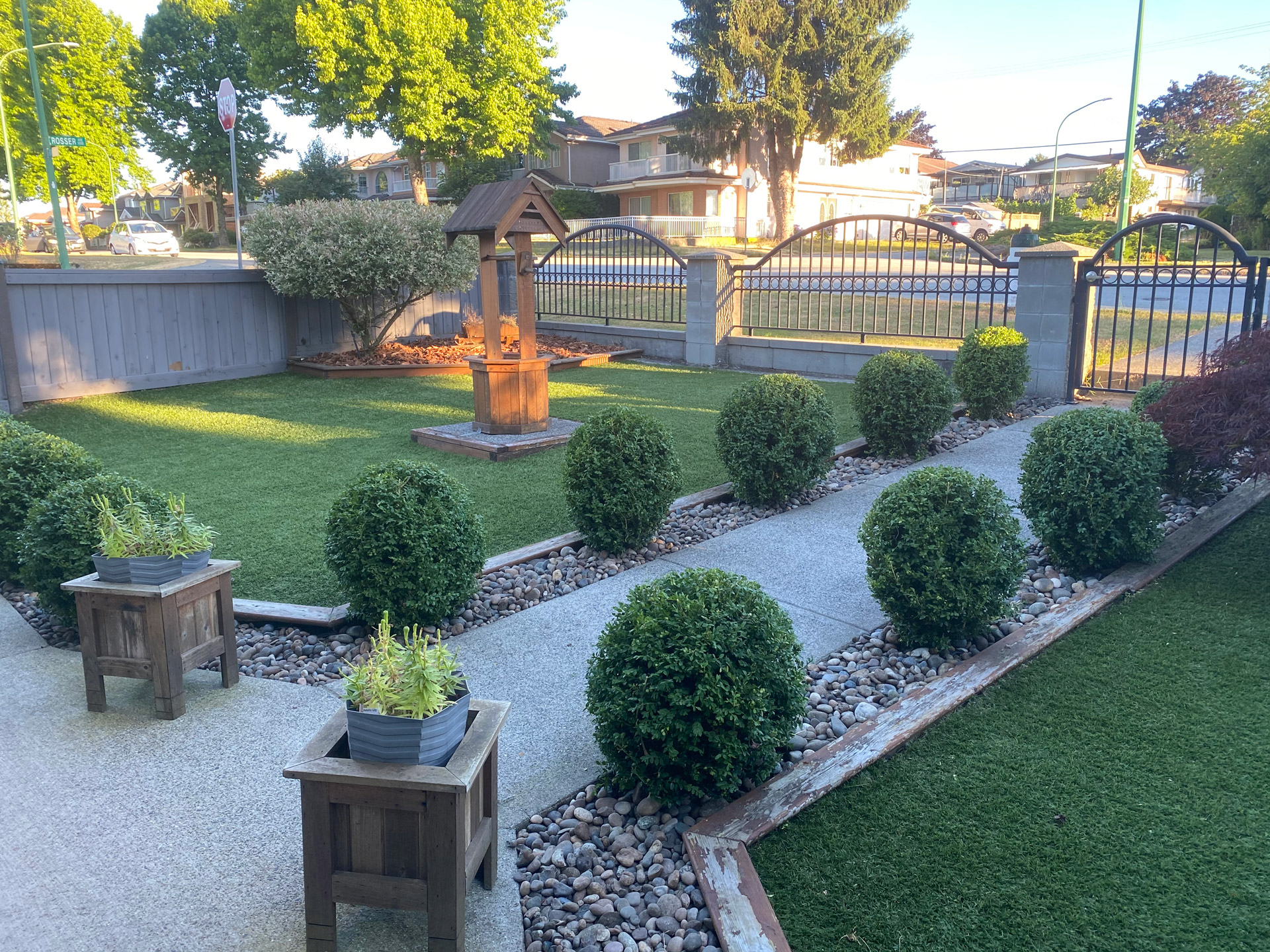
Understand the trade-off between aesthetics and longevity. Timber sleeper walls look warmer, fit rustic gardens, and are less expensive upfront. They also have a finite lifespan in wet climates, particularly untreated or poorly sealed timber. Engineered block walls cost more but can last 50 years with minimal maintenance. I advise clients to consider a 20-year budget plan: replacing timber sleepers should be anticipated, while concrete block is a longer-term investment.
Pathways and circulation that feel natural
Paths should read like a helpful invitation, not an afterthought. Follow desire lines where people naturally walk, rather than forcing a rigid geometry. In dense West Side yards, narrow paths of stepping stones set in gravel keep the lawn contiguous and reduce turf maintenance. Where accessibility is a priority, use smooth, continuous surfaces with gentle slopes. A practical rule I use: no path should require a step greater than 150 millimeters unless that step is a deliberate design element with handrails.
For noisy urban edges, place paths that encourage a short detour into a small planting niche to buffer street sound. On one Vancouver project, a winding path through a bed of dwarf evergreen shrubs dropped traffic noise by half, testing with a simple smartphone app. The change to circulation also increased perceived privacy for the patio.
Integrating plants with hardscape
Hardscape and planting are partners, not competitors. Plan root space and irrigation before installing paving. Vertical structure from walls and pergolas supports vines and climbers that soften hard edges over time. For example, an espaliered apple against a low retaining wall provides fruit, seasonal interest, and a green backdrop for seating.
Think about maintenance zones. Leave 150 to 300 millimeters of loose soil or planting strip next to paved edges to avoid mortar cracking from root growth and to make weeding practical. Choose plants for lower maintenance in narrow strips: sedums, low grasses, and groundcovers like ajuga or native coastal species perform well in tight spaces and reduce the need for edging.
Practical installations and on-site realities
Expect surprises once digging begins. Old foundations, buried concrete, and tree roots show up frequently in Vancouver renovation sites. I budget 10 to 20 percent contingency time and cost for unforeseen subsurface conditions. Excavation into compacted clay or organic fill requires different base compaction and drainage than digging into glacial till. On a recent project in Mount Pleasant, we uncovered a buried concrete slab that required additional demolition, but because the contingency was planned the overall project stayed on schedule.
Hire contractors who demonstrate technical competence with drainage and footing details. Shop bids are helpful, but they cannot substitute for boots-on-site experience. Ask to see photographs of completed projects in similar soils and climates, and get references you can reach directly. A one-page maintenance plan from the installer that outlines sealing cycles, winterizing steps, and sand topping for joints is a small deliverable that pays off later.
Maintenance realities and cost trade-offs
Maintenance is a conversation about time and money. Porcelain pavers and sealed natural stone resist staining and need minimal upkeep, but if a porcelain paver cracks you often need a full replacement of the broken tile. Unit pavers allow single-unit replacement, making them friendlier for homeowners who prefer DIY repairs. Concrete patios can be resurfaced or stained periodically; expect a significant reseal every five to eight years in Vancouver’s climate.
Salt and winter de-icing have consequences. Use calcium magnesium acetate instead of sodium chloride near planted areas and stone that might react adversely. Avoid metal shovels that scar stone surfaces; opt for plastic-edged tools and broom sweeps. I provide clients with a short winter checklist after handover that includes product recommendations and techniques I have used successfully.
Sustainability and municipal considerations
Vancouver has incentives and bylaws that affect stormwater management and tree protection. Permeable paving and rain gardens help reduce runoff and sometimes qualify for rebates or relaxed storm drain requirements. When removing trees for major hardscape work, secure permits where required and consider transplanting where feasible. I worked with a client who retained an arborist to stake and protect a mature maple during construction, saving significant money versus removing and replacing a mature tree.
Examples and brief case studies
A West End courtyard renovation: We replaced an aging brick patio with modular basalt pavers and a cast-in-place concrete seat wall with cedar cap. The project increased usable square footage by 40 percent, incorporated linear drainage at the threshold, and reduced maintenance. The owners reported using their space year-round for dinner and reading.
A sloped family yard in Kerrisdale: Terraced beds with reinforced modular block walls created a series of flat play areas and a raised vegetable bed. We installed a permeable gravel path and a small dry creek for stormwater conveyance. The design reduced lawn mowing time by nearly half and added productive planting space.
A rooftop deck in Yaletown: Lightweight porcelain pavers on adjustable pedestals allowed for concealed drainage and integration of planters with irrigation. The pedestals created a continuous thermal break and made access to mechanicals straightforward. The deck required a structural engineer and a detailed waterproofing sequence, but provides a low-maintenance, high-impact entertaining space.
How Luxy Landscaping approaches a hardscape project
When I work with clients as a Luxy Landscaping designer, the process begins with site listening. We measure slope, soil, existing drainage patterns, and microclimates. We sketch multiple options that vary in scale and budget and then detail the preferred option to address drainage, structural support, and material joints. I insist on mock-ups for unique materials and reference installations where clients can see the finish and texture in real life.
Cost transparency is central. Hardscape budgets vary widely, but for Vancouver BC, a basic patio with compacted base and unit pavers can start in the low thousands for small areas, while complex terraces, retaining walls, integrated lighting, and built-in seating with high-end stone can land well above ten thousand dollars. I provide phased options so clients can prioritize structural elements like drainage and retaining walls first, and finish materials later if needed.
Final considerations before you start
Hardscape reshapes how you use outdoor space. Before starting, clarify how you want to use the yard today and in five years. Are you planting tall trees that will cast shade? Will you add a hot tub that demands structural support and drainage? Do you want low maintenance or are you prepared for seasonal care? These decisions drive materials, structural needs, and long-term costs.
If you find yourself overwhelmed, invite a site visit. A competent designer or contractor can translate a list of wants into an actionable plan with realistic budgets and timelines. Vancouver’s climate rewards designs that are technically rigorous and visually calm, that avoid shortcuts in drainage and structure, and that choose materials appropriate to use and maintenance tolerance.
Choosing the right combination of durable materials, smart drainage, and human-centered layout transforms Vancouver yards. Hardscape should feel inevitable and effortless, creating rooms that function in drizzle and shine, in summer barbecues and winter nights. Luxy Landscaping focuses on that blend of durability and design, crafting outdoor spaces that earn daily use and survive the seasons with grace.
Luxy Landscaping
1285 W Broadway #600, Vancouver, BC V6H 3X8, Canada
+1-778-953-1444
[email protected]
Website: https://luxylandscaping.ca/